
Bitcoin slips below $90K as demand signals turn bearish
%20(1)%20(1).png)
Bitcoin’s struggle to hold above $90,000 is no longer just a question of volatility. After falling more than 22% in the fourth quarter, the world’s largest cryptocurrency is on course for its weakest year-end performance outside of major bear markets, according to CoinGlass data.
Repeated rebounds have failed to gain traction, with price gains from Asian and European sessions fading once US markets open. Observers note that loss of momentum matters because it reflects more than short-term positioning. A mix of derivatives pressure, cooling institutional demand, and weakening on-chain signals suggests Bitcoin may be entering a new phase of fatigue.
As record options expiries approach and demand indicators deteriorate, traders are being forced to reassess whether this is a consolidation or the early stages of a deeper downtrend.
What’s driving Bitcoin’s latest weakness?
Bitcoin’s recent slide below $88,000 during the US trading session reflects growing pressure from derivatives markets rather than sudden panic selling.
Bitcoin’s weak year-end
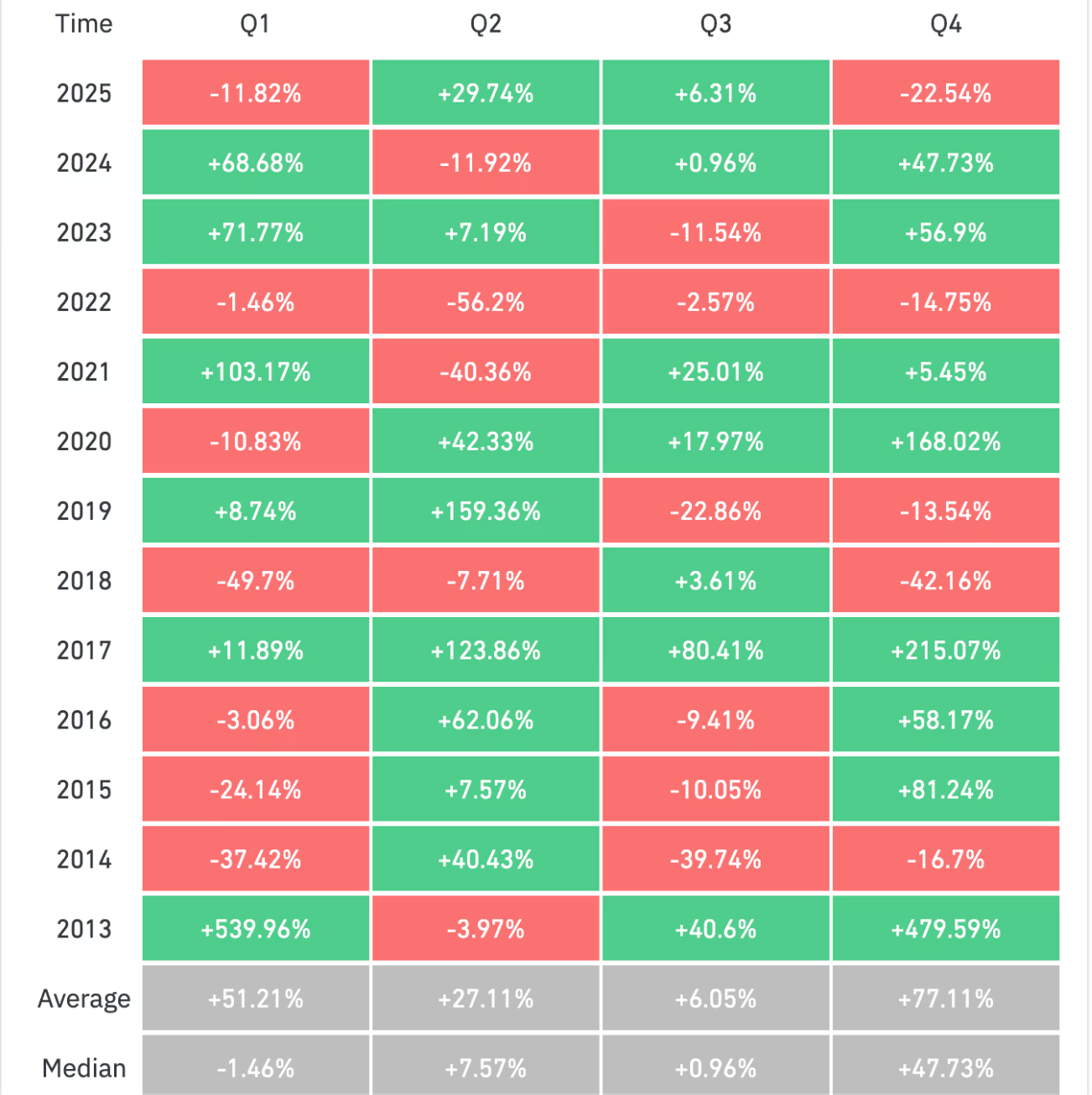
Price action has become increasingly erratic between $85,000 and $90,000 as traders position ahead of a record $28.5 billion in Bitcoin and Ethereum options expiring on Deribit. That figure represents more than half of the exchange’s total open interest, amplifying sensitivity around key strike levels.
At the centre of that tension sits Bitcoin’s $96,000 “max pain” level, where option sellers benefit most, according to Deribit’s chief commercial officer Jean-David Pequignot. A heavy $1.2 billion cluster of put options at $85,000 adds downside gravitational pull if selling accelerates. While longer-dated call spreads still target $100,000 and above, short-term hedging costs have risen sharply, signalling defensive rather than speculative positioning.
Why it matters
This shift is significant because Bitcoin’s recent rally phases were driven by demand expansion, rather than mechanical supply events. On-chain data from CryptoQuant indicates that demand growth has been slipping below its long-term trend since early October, marking a transition from expansion to contraction.
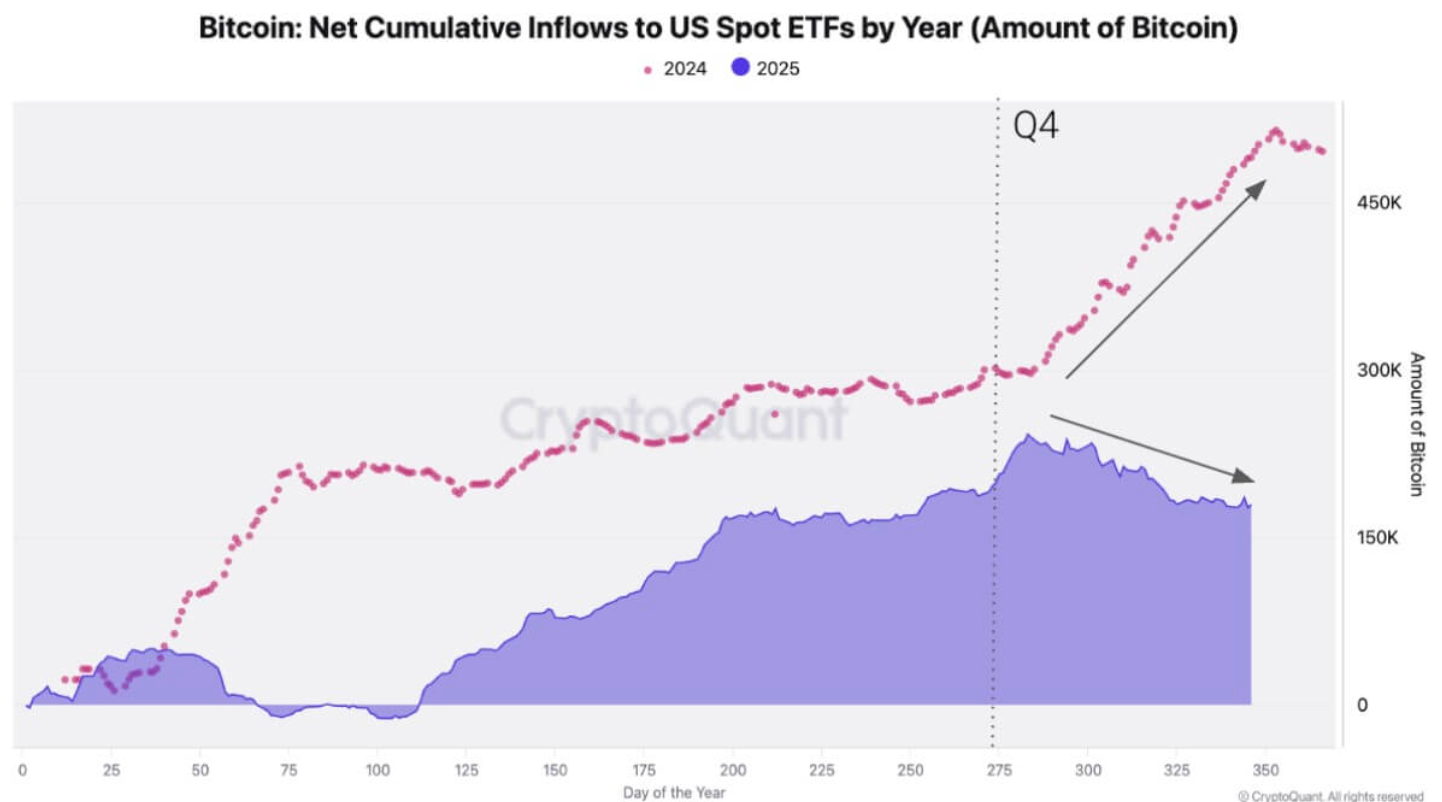
Historically, that pattern has coincided with major cycle inflection points rather than temporary pullbacks. Alex Kuptsikevich, chief market analyst at FxPro, describes the current rebound attempts as technical rather than structural. He argues that recent strength reflects exhaustion after weeks of selling, not renewed conviction.
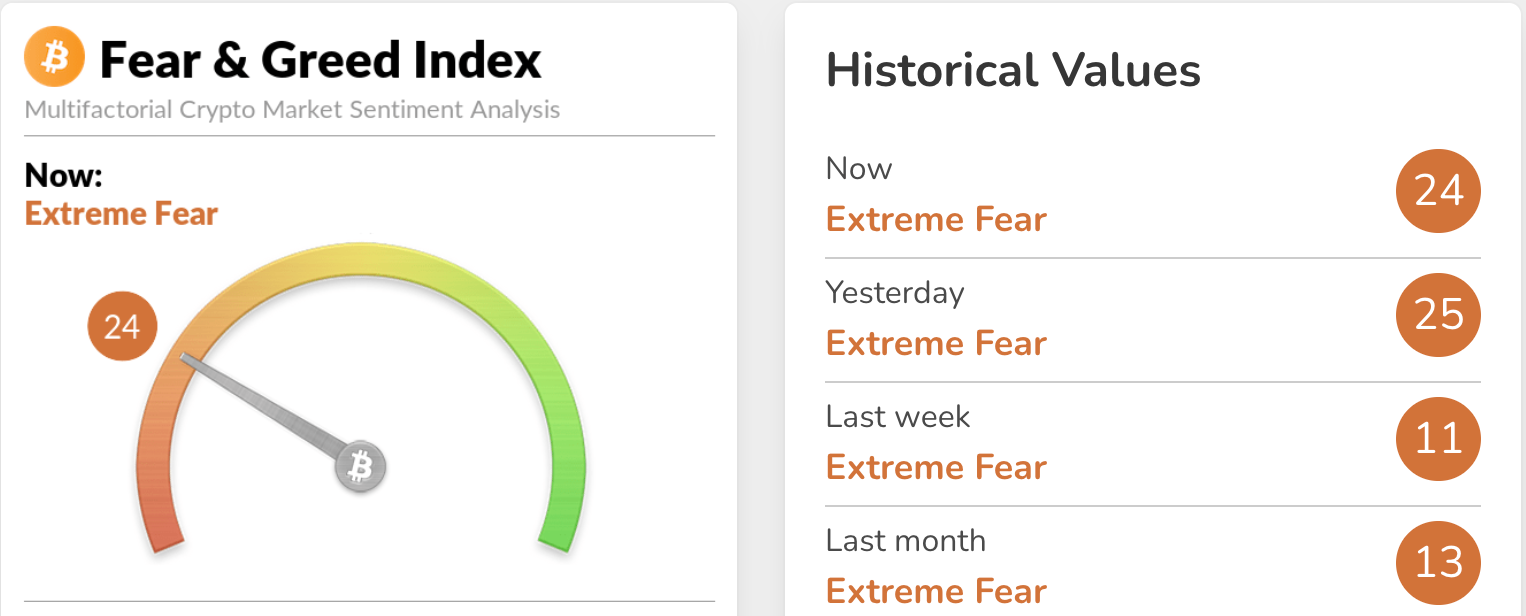
Sentiment indicators support that view, with the crypto Fear and Greed Index rising to 24 but remaining firmly in pessimistic territory.
Impact on the crypto market and traders
Market data shows that Bitcoin’s hesitation has rippled across the broader crypto market, keeping major tokens range-bound despite brief rallies. Ether, Solana, XRP, Cardano and Dogecoin have posted modest gains, yet none have broken decisively higher.
The total crypto market capitalisation has reclaimed the $3 trillion mark, a level that has served as a battleground between buyers and sellers throughout the past month.
Beneath the surface, cracks are visible. According to market data, US spot Bitcoin ETFs have shifted from aggressive accumulation to net selling, with holdings declining by roughly 24,000 BTC in late 2025. At the same time, long-term funding rates in perpetual futures have fallen to their lowest levels since late 2023, signalling waning appetite for leveraged long exposure.
Expert outlook: Consolidation or downtrend?
CryptoQuant analysts warn that Bitcoin may already be in a new downtrend, driven by demand exhaustion rather than macro shocks. The catalysts that powered the last expansion - spot ETF approvals, the US election outcome, and corporate treasury adoption - have largely been absorbed. Without fresh demand, price support has weakened, leaving Bitcoin vulnerable to deeper pullbacks.
That does not eliminate the possibility of recovery. CryptoQuant notes that Bitcoin cycles hinge on demand regeneration, not time-based events like halvings. If institutional flows stabilise and on-chain activity improves, a recovery later in 2026 remains plausible. Until then, the market faces a tug-of-war between six-figure forecasts and downside scenarios that place support closer to $70,000.
Key takeaway
Bitcoin’s inability to reclaim $90,000 reflects deeper structural fatigue rather than short-term volatility. Cooling institutional flows, defensive derivatives positioning, and weakening on-chain demand suggest the market has entered a more cautious phase. While long-term optimism has not vanished, near-term risks remain skewed to the downside. Traders will be watching options expiry dynamics, ETF flows, and demand indicators closely for signs of a genuine trend shift.
Bitcoin technical insights
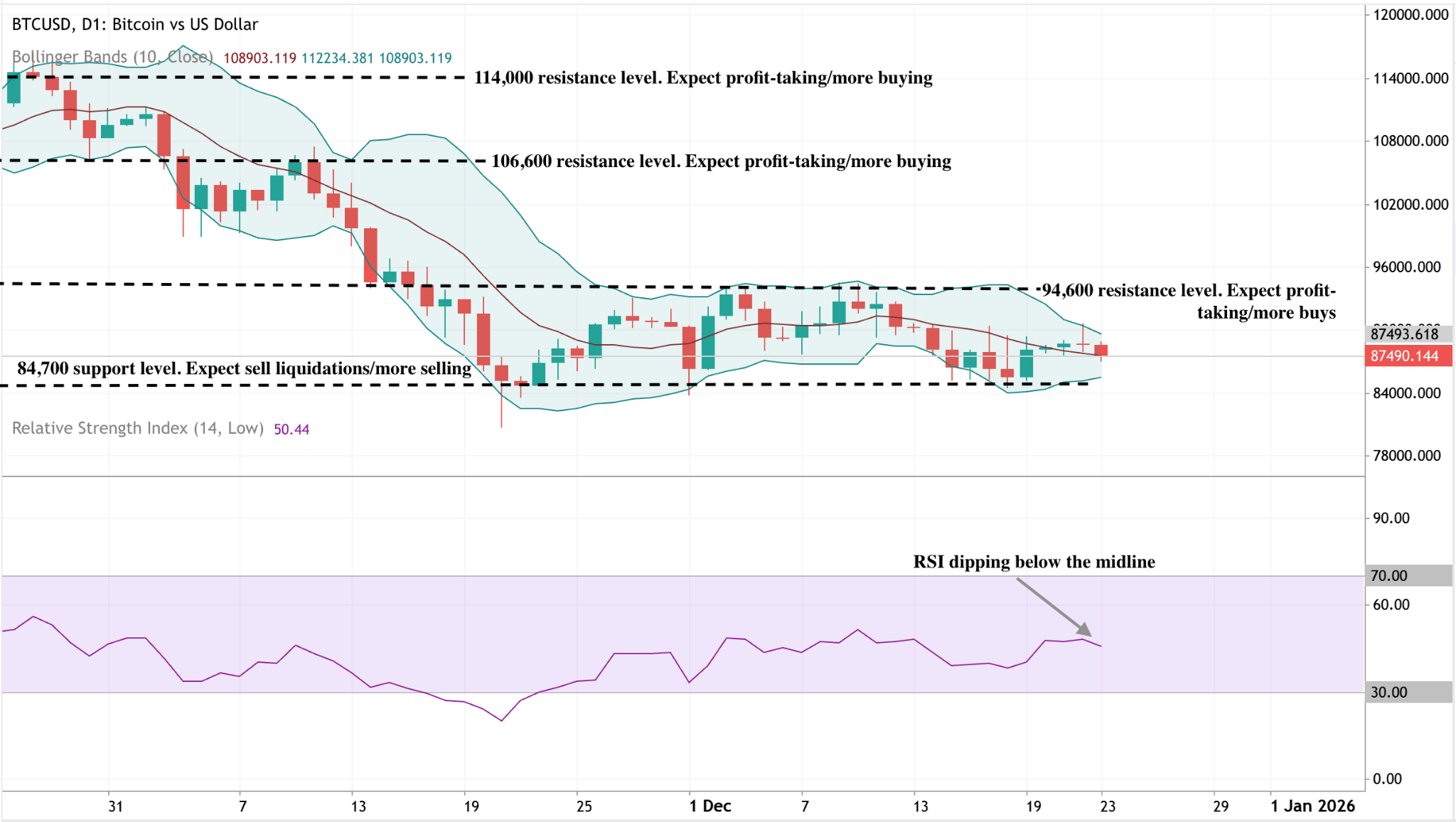
Bitcoin remains range-bound, with price capped below the $94,600 resistance level and trading near the middle-to-lower Bollinger Band, signalling weak upside momentum and a lack of strong buyer conviction. Previous attempts to reclaim higher levels have waned, maintaining the broader structure's corrective nature.
On the downside, $84,700 remains a critical support level, with a clean break likely to trigger sell-side liquidations. Momentum is softening, with the RSI dipping just below the midline, suggesting bearish pressure is gradually building rather than aggressively accelerating.
The performance figures quoted are not a guarantee of future performance.


