কেন সিলভারের ৩০% পতন বৈশ্বিক বাজারকে কাঁপিয়ে দিয়েছে

সিলভারের ৩০% পতন বৈশ্বিক বাজারকে কাঁপিয়ে দিয়েছে কারণ এটি প্রকাশ করেছে সাম্প্রতিক মূল্যবান ধাতুর র্যালি কতটা ভঙ্গুর হয়ে পড়েছিল। বিশেষজ্ঞরা উল্লেখ করেছেন, যা কাঠামোগতভাবে চালিত ঊর্ধ্বগতির মতো মনে হচ্ছিল, বাস্তবে তা ছিল মূলত জল্পনামূলক অবস্থান, লিভারেজ এবং কম তরলতার ওপর নির্ভরশীল। যখন দাম ঘুরে দাঁড়ায়, তখন জোরপূর্বক বিক্রি ধাতু, মুদ্রা এবং ঝুঁকিপূর্ণ সম্পদজুড়ে ছড়িয়ে পড়ে, যার ফলে বাজারের স্থিতিশীলতা নিয়ে ব্যাপক পুনর্মূল্যায়ন শুরু হয়।
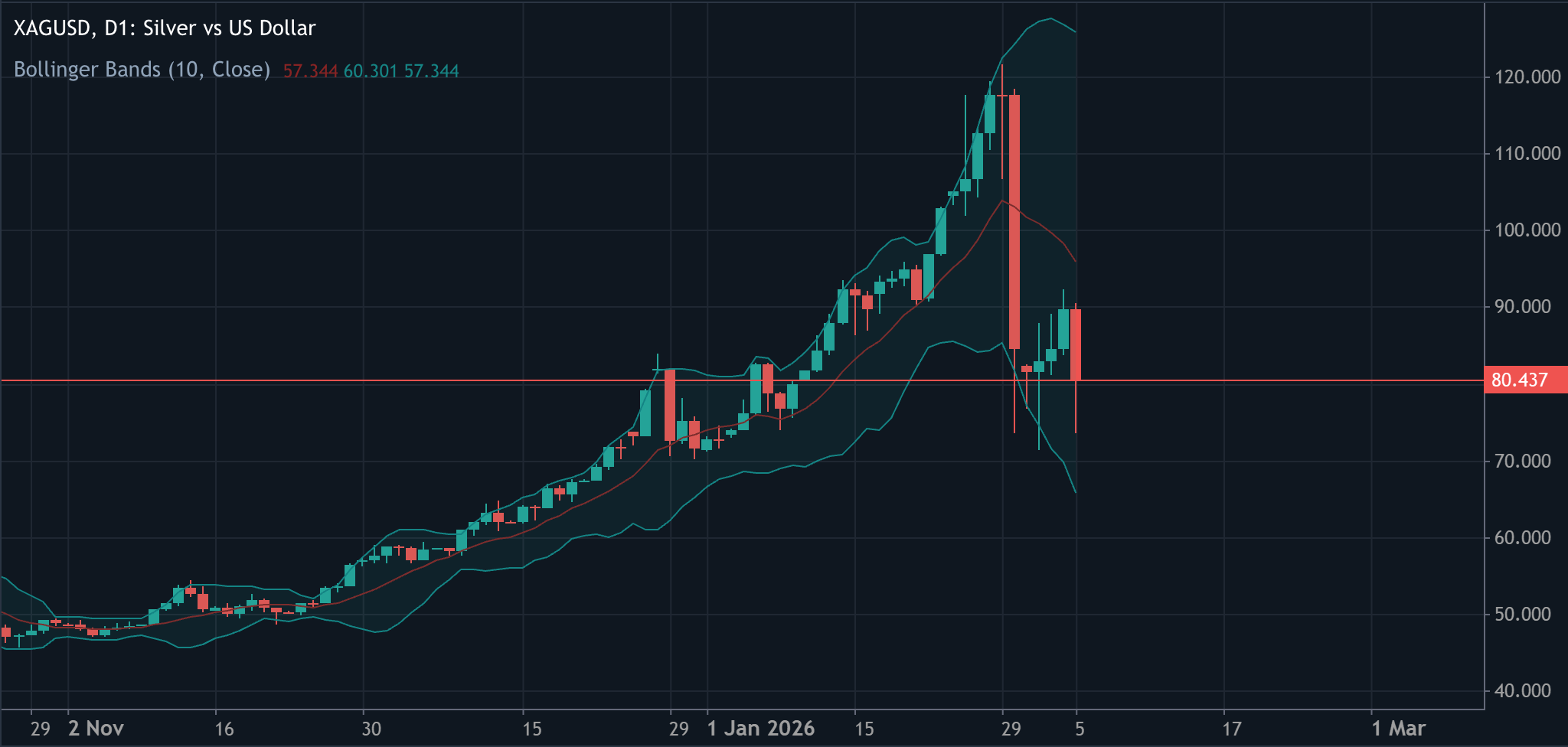
এই পতনের মাত্রা ছিল অত্যন্ত লক্ষণীয়। স্পট সিলভার মাত্র এক সেশনে ১৭% পর্যন্ত পড়ে যায়, অল্প সময়ের জন্য আউন্সপ্রতি $৯০-এর ওপরে লেনদেনের পর, তা ভেঙে পড়ে প্রায় $৭৭-এ পৌঁছায়।
গোল্ডও অনুসরণ করে, ৩.৫%-এর বেশি পড়ে যায়, যা ২০১৩ সালের পর সবচেয়ে বড় পতন। এই ঘটনা বিনিয়োগকারীদের জন্য একটি সতর্কবার্তা হয়ে উঠেছে, যারা অনিশ্চিত নীতিগত পরিবেশে গতিমুখী বাজারে চলাফেরা করছেন।
সিলভারের পতনের কারণ কী?
সিলভারের পতনের কেন্দ্রে রয়েছে জল্পনামূলক অবস্থানের আগ্রাসী গঠন এবং দ্রুত অবসান। শীর্ষে ওঠার আগের কয়েক সপ্তাহে, বিনিয়োগকারীরা লিভারেজড এক্সচেঞ্জ-ট্রেডেড প্রোডাক্ট এবং কল অপশনে ভিড় করেন, যার ফলে দাম বাস্তব চাহিদার তুলনায় অনেক বেশি উঠে যায়। গত সপ্তাহের শেষ দিকে র্যালি থেমে গেলে, সেই অবস্থানগুলো সহায়ক থেকে দায়ে পরিণত হয়, দ্রুত মার্জিন কল এবং স্টপ-লস ট্রিগার করে।
তরলতার অবস্থা পরিস্থিতিকে আরও খারাপ করে তোলে। সিলভার তুলনামূলকভাবে ছোট এবং কম তরল বাজারে লেনদেন হয়, বিশেষ করে লন্ডনের ওভার-দ্য-কাউন্টার মার্কেটে। Goldman Sachs জানিয়েছে, ডিলারদের হেজিং আচমকা পরিবর্তিত হয়—দাম বাড়ার সময় কেনা থেকে দাম পড়ার সময় বিক্রিতে চলে যায়, যার ফলে ক্ষতি পুরো ব্যবস্থায় ছড়িয়ে পড়ে। সবচেয়ে বড় কিছু অস্থিরতা যখন চীনা ফিউচার মার্কেট বন্ধ ছিল, তখনই ঘটে, যা ইঙ্গিত দেয় পশ্চিমা প্রবাহই উত্থান ও পতন উভয়ই চালিয়েছে।
কেন এটি গুরুত্বপূর্ণ
সিলভারের পতন গুরুত্বপূর্ণ কারণ এটি সীমাবদ্ধ থাকেনি। প্রতিবেদনে বলা হয়েছে, আকস্মিক এই উল্টে যাওয়া ধাতু বাজারজুড়ে মনোভাবকে ভারাক্রান্ত করেছে, কপার প্রতি টন $১৩,০০০-এর নিচে নেমে গেছে এবং বিস্তৃত পণ্যদ্রব্যের দাম চাপে পড়েছে। একটি ধাতু, যা নিরাপদ আশ্রয় এবং শিল্প উভয় ভূমিকায় রয়েছে, এতটা হিংস্রভাবে ভেঙে পড়লে, তা প্রায়ই ঝুঁকি নিয়ে গভীর অস্বস্তির সংকেত দেয়।
বিশ্লেষকরা আরও সতর্ক করেছেন, অবস্থানগত ঝুঁকি পুরোপুরি দূর হয়নি। Lighthouse Canton-এর ব্যবস্থাপনা পরিচালক সুনীল গার্গ বলেছেন, জল্পনামূলক অতিরিক্ততা “এখনও পুরোপুরি দূর হয়নি,” যদিও তীব্র সংশোধন হয়েছে। দীর্ঘমেয়াদে সিলভারের শিল্প চাহিদা শক্তিশালী থাকলেও, স্বল্পমেয়াদে দামের গতিপ্রকৃতি এখনও শেষ ব্যবহার নয়, আর্থিক প্রবাহ দ্বারা নির্ধারিত হচ্ছে।
বাজার ও বিনিয়োগকারীদের ওপর প্রভাব
ট্রেডারদের জন্য, এর প্রভাব ছিল তাৎক্ষণিক ও ব্যয়বহুল। CME Group সহ ধাতু এক্সচেঞ্জগুলো বিক্রির পর মার্জিন চাহিদা বাড়িয়েছে, যার ফলে লিভারেজড অবস্থান ধরে রাখার খরচ বেড়েছে এবং আরও ডি-লিভারেজিং বাধ্যতামূলক হয়েছে। এই প্রবণতা দ্রুত পুনরুদ্ধারকে দমন করে এবং অস্থিরতা দীর্ঘায়িত করে, বিশেষ করে সেই সম্পদে যেখানে সম্প্রতি গতিমুখী ট্রেডাররা আকৃষ্ট হয়েছিল।
এই ঘটনা অস্বস্তিকরভাবে meme-stock আচরণের সঙ্গে তুলনা টেনেছে। বাজার অংশগ্রহণকারীরা ক্রমবর্ধমানভাবে সিলভারের সাম্প্রতিক র্যালিকে টেকসই মূল্যায়ন থেকে বিচ্ছিন্ন বলে বর্ণনা করছেন, যেখানে মৌলিক বিষয়ের চেয়ে গতি বেশি প্রভাব ফেলেছে। Interactive Brokers-এর Steve Sosnick বলেছেন, এই ধাতুতে “momentum trading হয়েছে, যা অন্যান্য জল্পনামূলক সম্পদের তুলনায়ও বেশি ছিল,” ফলে মনোভাব বদলানোর সঙ্গে সঙ্গে দাম ঝুঁকিপূর্ণ হয়ে পড়ে।
বিশেষজ্ঞদের দৃষ্টিভঙ্গি
আগামী দিনগুলোতে অস্থিরতা অব্যাহত থাকার সম্ভাবনা রয়েছে। Standard Chartered-এর বিশ্লেষকরা বলেছেন, মার্কিন মুদ্রানীতির দিকনির্দেশনা—বিশেষ করে সুদের হার কমানোর গতি—স্পষ্ট না হওয়া পর্যন্ত মূল্যবান ধাতু অস্থির থাকবে। Federal Reserve কর্মকর্তাদের কঠোর মন্তব্য US ডলারকে শক্তিশালী করেছে, যার ফলে সিলভারের মতো ডলার-নির্ভর ধাতুর ওপর চাপ বেড়েছে।
রাজনৈতিক অনিশ্চয়তা পরিস্থিতিকে আরও জটিল করেছে। Federal Reserve চেয়ার হিসেবে Kevin Warsh-এর মনোনয়নের প্রভাব বাজার বিবেচনা করছে, যদিও প্রেসিডেন্ট Donald Trump জোর দিয়ে বলেছেন, সুদের হার কমার সম্ভাবনা রয়েছে। সিলভারের জন্য, ট্রেডাররা $৭০ স্তরটি নিবিড়ভাবে পর্যবেক্ষণ করছেন। এটি টেকসইভাবে নিচে নেমে গেলে বিভিন্ন সম্পদশ্রেণিতে ঝুঁকি-এড়ানোর প্রবণতা বাড়তে পারে, আর উপরে থাকলে জল্পনামূলক অতিরিক্ততা ধীরে ধীরে কমতে পারে।
মূল বার্তা
সিলভারের ৩০% পতন বৈশ্বিক বাজারকে কাঁপিয়ে দিয়েছে কারণ এটি দেখিয়েছে, গতিমুখী র্যালি কত দ্রুত চাপে ভেঙে পড়তে পারে। এই বিক্রি তরলতার ঘাটতি, অতিরিক্ত লিভারেজ এবং ধাতু বাজারজুড়ে ভঙ্গুর মনোভাব প্রকাশ করেছে। কাঠামোগত চাহিদা সহায়ক থাকলেও, সিলভারের ভবিষ্যৎ নির্ভর করছে জল্পনামূলক অতিরিক্ততা পুরোপুরি দূর হতে পারে কিনা তার ওপর। ট্রেডাররা আগামী দিনে $৭০ স্তর এবং মার্কিন নীতিগত সংকেত নিবিড়ভাবে পর্যবেক্ষণ করবেন।
সিলভারের টেকনিক্যাল আউটলুক
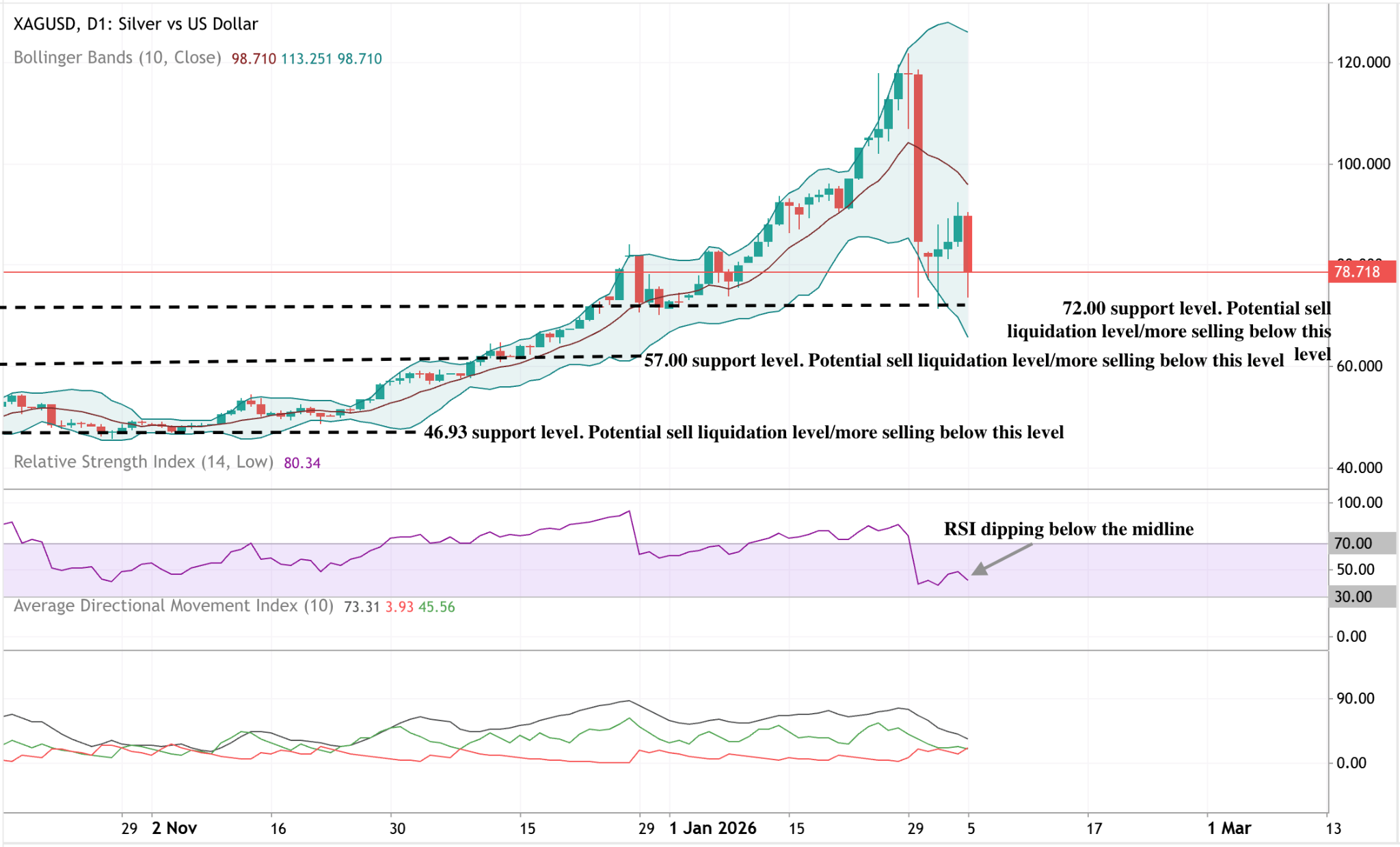
সাম্প্রতিক ঊর্ধ্বমুখী প্রবাহের পর সিলভার তীব্রভাবে উচ্চতা থেকে পিছিয়ে এসেছে, এবং দাম Bollinger Bands-এর উপরের ব্যান্ডের বাইরে অল্প সময় লেনদেনের পর আবার ব্যান্ডের ভেতরে ফিরে এসেছে। এই পতনের পরও, ব্যান্ডগুলো এখনও বিস্তৃত রয়েছে, যা ইঙ্গিত দেয় অস্থিরতা আগের পর্যায়ের তুলনায় এখনও বেশি।
Momentum সূচকগুলো চরম অবস্থা থেকে স্পষ্ট পরিবর্তন দেখাচ্ছে: RSI ওভারবট স্তর থেকে নেমে এসেছে এবং এখন মিডলাইনের নিচে অবস্থান করছে, যা গতিমুখে উল্লেখযোগ্য শীতলতা প্রতিফলিত করে।
Trend strength এখনও উঁচু, যা উচ্চ ADX রিডিং দ্বারা প্রমাণিত, অর্থাৎ সামগ্রিক ট্রেন্ড পরিবেশ শক্তিশালী থাকলেও স্বল্পমেয়াদী গতি দুর্বল হয়েছে। কাঠামোগতভাবে, দাম এখনও আগের কনসোলিডেশন এলাকাগুলোর ($৭২, $৫৭, এবং $৪৬.৯৩) অনেক ওপরে লেনদেন হচ্ছে, যা পূর্ববর্তী ঊর্ধ্বগতির মাত্রা তুলে ধরে।