
How to trade commodities on Deriv
Commodities trading on Deriv offers traders exposure to price movements in energy, metals, and selected soft commodities through two main instruments: contracts for difference (CFDs) and digital options. In 2026 and beyond, Deriv provides a suite of platforms—Deriv MT5, Deriv cTrader, Deriv Trader, SmartTrader, Deriv Bot, and Deriv GO—to support various trading styles. CFDs allow flexible position management with stops, partials, and trailing, while options offer fixed-risk contracts based on price direction or level outcomes.
Quick summary
- Commodities like oil and gold react to supply, demand, and macroeconomic factors.
- CFDs suit traders who manage positions over hours or days.
- Digital options are often used by traders to express short-term or level-based ideas, with predefined risk per contract.
- Consistent position sizing and awareness of event risk support responsible trading.
How to trade commodities on Deriv
CFDs (Deriv MT5, Deriv cTrader)
You trade price exposure, not physical goods. CFDs let you open-endedly manage trades: define risk with stop losses, scale in gradually, take partial profits, and trail winners.
Benefits:
- Flexible management and partial closures.
- Defined invalidation via stop loss.
- Suitable for trend-following and breakout strategies.
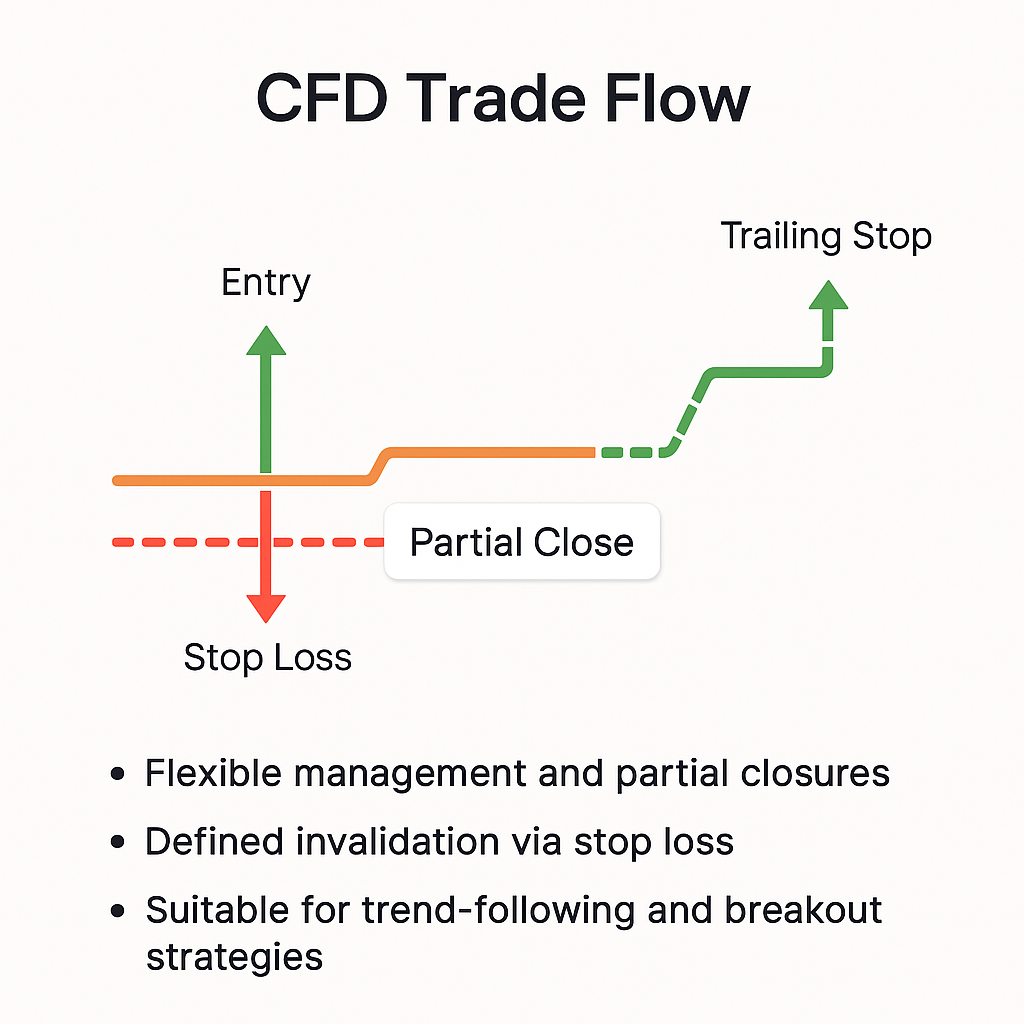
A practical example: A trader analysing US Oil (WTI crude) identifies a breakout above resistance. On Deriv MT5, they place a buy stop order slightly above that level, set a defined stop below the previous swing, and use Deriv GO alerts to manage a trailing stop while monitoring risk. This structured method supports consistency across sessions, though outcomes remain dependent on market conditions.
Risk vs reward setup checklist:
- Identify a clear technical trigger (trend or level).
- Calculate position size based on stop distance.
- Predefine partial profit zones.
- Trail stops as structure evolves.
According to a Deriv analyst, in 2026, the flexibility of CFDs gives traders the ability to adapt to intraday volatility while maintaining structured risk control.
“It’s not about predicting every move. It’s about defining risk boundaries.”
Digital options (Deriv Trader, SmartTrader, Deriv Bot)
You select directional or level-based contracts with predefined duration and stake. Rise/Fall captures short-term direction; Higher/Lower and Touch/No Touch focus on level outcomes.
Benefits:
- Fixed maximum loss.
- Simple directional and level-based expressions.
- Useful for volatile or event-driven periods.
Additional guidance: Deriv’s digital options are ideal for structured learning. Beginners can start with Rise/Fall to understand directional behaviour, then progress to Higher/Lower for level-based forecasting. As they gain confidence, they can explore Touch/No Touch contracts to test precision in predicting volatility.
Which Deriv platform suits your trading style?
CFDs vs options: Which fits your strategy?
Oil (US Oil / UK Brent Oil)
- Options: Traders commonly use Rise/Fall for directional moves around events like OPEC+ headlines or inventory reports while Touch/No Touch for “tag or avoid” scenarios. Typical durations: 10–30 minutes intraday, up to 2 hours for session outcomes.
- CFDs: Typical strategies are breakouts or pullbacks. Both allow placing stops beyond true invalidation; take partial profits at 1R, and trail the remainder. Pros mainly trade them during London–New York overlap for stronger liquidity.
Gold (XAUUSD)
- Options: Most traders use Rise/Fall in short momentum bursts or Higher/Lower for session-end level tests. Often preferred during event weeks (e.g., central bank announcements), where defining maximum risk is a priority.
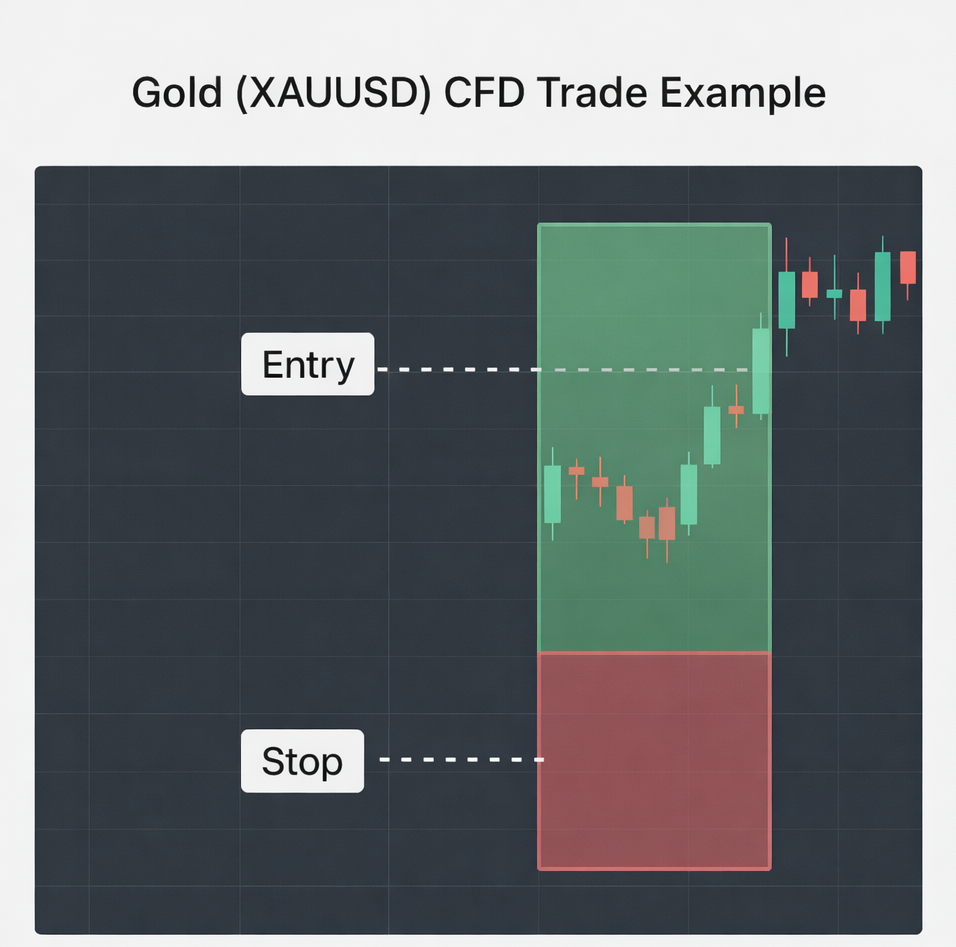
- CFDs: Pros trade structured pullbacks in uptrends or range edges with micro size. Take partials, trail winners, and use alerts on Deriv GO for discipline.
A useful framework: CFDs suit traders who want active control and incremental exits, while options suit those who prefer defined risk and time-boxed outcomes. During trending phases, CFDs provide flexibility; in event-driven markets, options limit exposure.
An IMF market report mentions:
“Gold remains sensitive to rate expectations and currency trends. The ability to define risk through options trading allows individual traders to participate in macro themes without leverage-induced exposure.”
Natural gas
- Options: Traders commonly use Touch/No Touch during range-bound conditions or short-lived momentum phases, particularly when volatility is elevated. Stakes are typically kept small due to the asset’s sharp and unpredictable price movements.
- CFDs: CFDs are usually traded only when market structure is clear and volatility stabilises. Traders often use wider stops relative to the prevailing range and reduce position size to account for abrupt price swings.
Soft commodities (e.g., cocoa)
- Options: Most traders use small-stake Rise/Fall contracts around clearly defined levels during periods of supply-driven volatility, such as weather disruptions or production news.
- CFDs: CFDs are generally used during quieter market conditions, where price action remains range-bound. Traders often apply mean-reversion approaches, manage positions intraday, and avoid holding exposure overnight due to swap costs and headline risk.
Comparing CFDs vs options in different markets
Adding further depth, experienced traders often combine both instruments. For example, a trader might open a CFD position for a longer trend while simultaneously using a No Touch option as insurance during volatile events. This hybrid approach keeps exposure balanced while maintaining participation in the broader market move.
Why are Deriv platforms important for commodities markets in the future?
Deriv’s ecosystem is built for adaptability. Traders can analyse markets on Deriv MT5, automate a portion of their strategy on Deriv Bot, and monitor progress using Deriv GO. This connected structure ensures traders remain in control, regardless of market conditions or device access.
What influences commodities markets in the future?
Supply and demand: The U.S. Energy Information Administration (EIA) reports often trigger oil volatility. Large draws have historically lifted prices; builds have pressured them.
Weather & geopolitics: OPEC+ policies, wars, and transport disruptions affect both energy and agricultural markets. During such events, market conditions often become more volatile, leading many traders to reassess exposure and favour instruments with predefined risk characteristics.
Macro & currency: Gold responds to interest rate shifts and the U.S. dollar. As global rate cycles evolve, traders opt for options remain useful for defined risk exposure during uncertain macro periods.
Emerging trends: Renewable energy developments and industrial demand from Asia are shaping commodity prices, especially metals. Traders on Deriv can use CFDs to capture these longer-term shifts or options to isolate event risk.
A Deriv risk strategist explains:
“Diversification between CFDs and options offers a balanced way to navigate volatility. In uncertain macro conditions, traders can stay active without taking on excessive directional risk.”
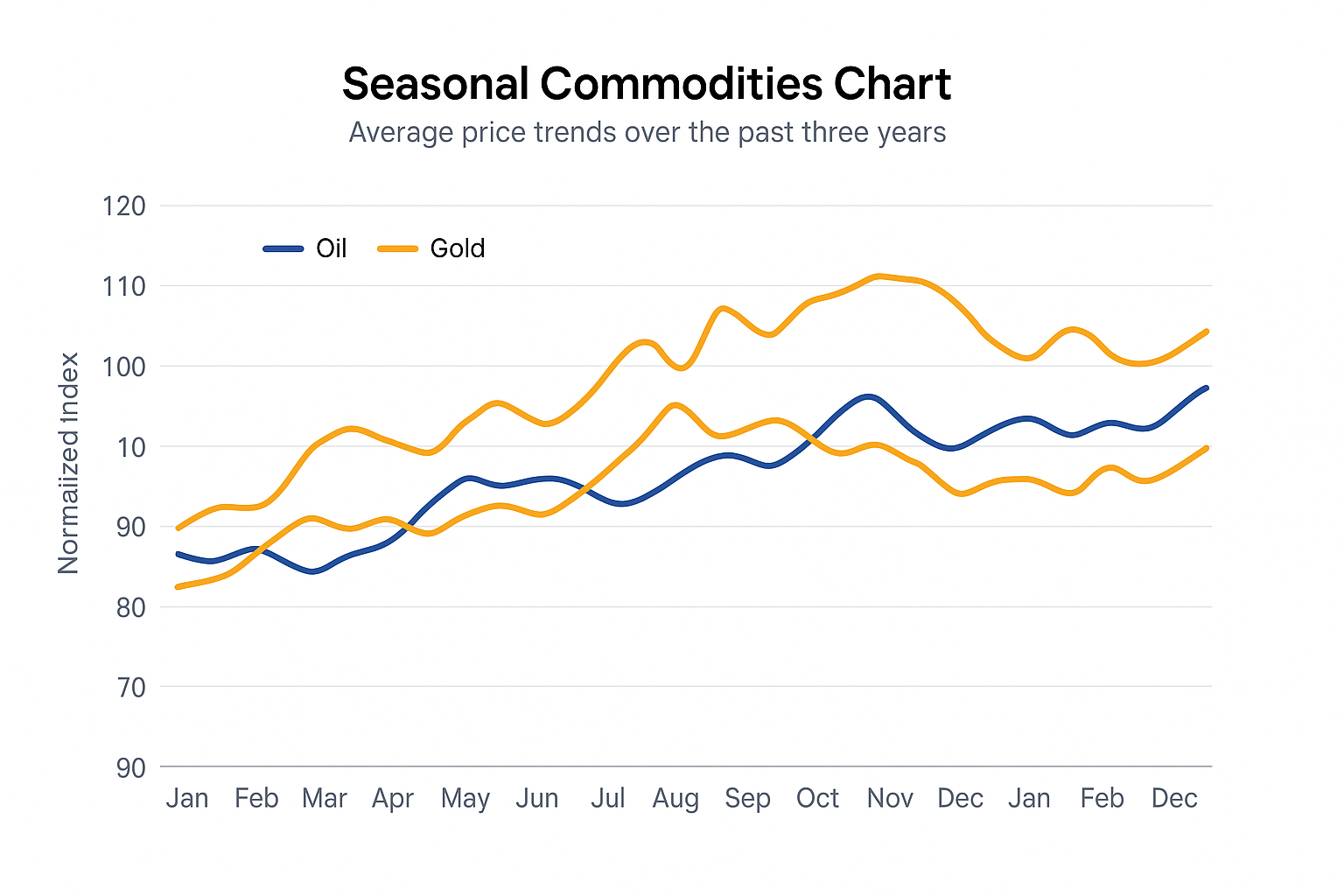
Seasonality: Gas demand peaks in winter; agricultural prices respond to crop cycles. Professional traders treat seasonality as context, not a signal.
Future outlook: As data analytics and AI trading tools become more integrated, Deriv aims to enhance pattern recognition and sentiment tracking within its platforms, giving traders clearer macro insight and precision in execution.
What trading risks and strategies should you know?
- Volatility spikes and gaps: During major events, options are commonly discussed for their defined risk, while CFDs are often associated with trend-driven market conditions once structure becomes clearer.
- Leverage risk on CFDs: CFD outcomes are closely tied to position size relative to stop distance, which is why leverage is often discussed alongside sizing discipline and clearly defined invalidation levels.
- Holding costs: CFD positions held beyond rollover can involve swap charges, so holding time and contract specifications are commonly reviewed when traders evaluate longer-duration exposure.
- Slippage: In fast markets, execution can differ from intended levels, which is why pending orders and smaller sizes are frequently discussed; with options, the contract cost is known upfront, although outcomes still depend on market movement.
- Correlation risk: Commodity markets can move together under shared catalysts, so correlated exposures (e.g., US Oil and UK Brent Oil) are often discussed as a portfolio-level concentration risk.
- Model risk: Automated approaches can degrade when market regimes change, which is why simpler rule sets with fewer filters and clearer constraints are commonly viewed as easier to monitor and maintain.
- Psychological risk: Behavioural errors such as overtrading or loss-chasing are widely discussed; consistent stake sizing for options and pre-planned management rules for CFDs are often used to reduce decision pressure.
- Operational errors: Outcomes can be affected by contract selection choices (e.g., duration, barrier placement, or order type), so matching the contract parameters to the underlying idea is commonly emphasised in execution planning.
Before placing a trade checklist:
- Confirm news and event calendar.
- Verify position size vs. account equity.
- Set stop-loss and target before execution.
- Limit correlated exposure across assets.
- Review emotional state and avoid impulse trades.
Expanding risk management beyond single trades, traders often look at account-wide exposure and how correlations between instruments can influence overall drawdowns. Margin usage and daily loss limits are commonly reviewed as part of broader risk oversight. Consistent review of margin usage and daily loss thresholds forms the backbone of professional risk discipline.
How can beginners approach commodities trading responsibly?
- Beginners can start by practising with one metal (gold) and one energy (oil) only.
- CFD risk per trade: 1–2% of equity; option stakes 0.5–1%.
- Avoid stacking correlated exposures.
- Conduct weekly 30-minute reviews.
What’s next for commodities trading on Deriv?
Deriv continues to refine its trading technology, introducing more automation tools, predictive insights, and improved mobile performance. As global markets evolve, traders can expect seamless integration between risk control tools, AI-backed analytics, and platform upgrades supporting faster execution and contextual alerts.
In addition, Deriv plans to expand educational support, offering interactive learning modules and case-based lessons through the Deriv Academy. These resources aim to help traders understand macroeconomic drivers, risk mechanics, and practical trade structuring across multiple commodities.
Key takeaways
Commodities let traders express views on global supply, demand, and macro shifts. On Deriv, CFDs provide flexible management, while digital options define risk precisely. Start with a demo, keep stakes small, and refine one consistent approach at a time.
Disclaimer:
Digital options trading on commodities are not available for clients residing within the EU.
The Deriv X, Deriv Bot, and SmartTrader platforms are not available for clients residing within the EU.


