
Warum der Gemini–Apple-Deal von Google ein entscheidender KI-Moment ist

Googles Entscheidung, seine Gemini-Modelle in Apples Siri zu integrieren, ist ein entscheidender KI-Moment, weil sie das Schlachtfeld vom Innovations-Theater hin zur realen Verbreitung verschiebt. Anstatt um Aufmerksamkeit mit eigenständigen Chatbots zu konkurrieren, hat Alphabet sich einen Platz im Apple-Ökosystem mit mehr als zwei Milliarden aktiven Geräten gesichert und platziert seine KI dort, wo das tatsächliche Nutzerverhalten stattfindet.
Die Märkte reagierten gelassen: Die Alphabet-Aktie stieg um rund 1 %, Apple legte nachbörslich um 0,3 % zu. Doch die Bedeutung reicht weit über die anfängliche Kursbewegung hinaus. Diese Vereinbarung markiert eine neue Phase der künstlichen Intelligenz, in der Skalierung, Integration und Vertrauen wichtiger werden als die Frage, wer das auffälligste Modell zuerst liefert.
Was treibt Googles Gemini-Initiative an?
Im Kern spiegelt dieser Deal Googles langjährige Strategie wider: Durch Infrastruktur gewinnen, nicht durch Spektakel. Während Konkurrenten um Schlagzeilen kämpfen, konzentriert sich Alphabet darauf, Gemini in Cloud-Dienste, Unternehmenslösungen und nun auch in die weltweit einflussreichste Consumer-Hardware-Plattform einzubetten. Das Siri-Update verschafft Google einen KI-Distributionskanal, den keine Werbekampagne kaufen könnte.
Auch die Ökonomie der künstlichen Intelligenz erklärt das Timing. Das Training und der Einsatz von Spitzenmodellen erfordern enorme Rechenressourcen und spezialisierte Chips – Bereiche, in denen Google bereits im industriellen Maßstab agiert. Da Chiphersteller KI-Rechenzentren gegenüber Unterhaltungselektronik priorisieren, wird die Kontrolle über zuverlässige KI-Infrastruktur zu einem Wettbewerbsvorteil statt zu einer Kostenbelastung.
Entscheidend ist, dass Apples Zustimmung die Reife von Gemini bestätigt. Apple hat bestätigt, dass Gemini die nächste Generation der Apple Foundation Models antreiben wird, während Apple Intelligence weiterhin auf dem Gerät und über das Private Cloud Compute-Framework läuft und strenge Datenschutzstandards wahrt. Dieses Gleichgewicht zwischen Leistungsfähigkeit und Kontrolle wird in KI-Partnerschaften immer entscheidender.
Warum das wichtig ist
Für Alphabet definiert die Vereinbarung seine Rolle im KI-Wettlauf neu. Es geht nicht mehr darum, ob Google wettbewerbsfähige Modelle bauen kann, sondern ob es still und leise zur Standard-KI-Schicht auf Plattformen wird, die es nicht besitzt. Parth Talsania, CEO von Equisights Research, beschrieb den Schritt als einen, der „OpenAI in eine unterstützende Rolle verschiebt“ und unterstreicht, wie Verbreitung reines Modell-Branding übertreffen kann.
Für Investoren ist das relevant, weil Verbreitung Experimente in Umsatz verwandelt. In den Alltag integrierte KI schafft eine stetige Nachfrage nach Cloud-Computing, Unternehmensdiensten und langfristigen Monetarisierungsmöglichkeiten. Alphabet erreicht nun Apples Premium-Nutzerbasis – ein Segment, das historisch außerhalb von Googles tiefstem Ökosystem lag.
Der Deal stellt auch eine gängige Markterzählung infrage, wonach Apple bei KI „hinterherhinkt“, während Google Schwierigkeiten hat, sie zu monetarisieren. Tatsächlich setzen beide Unternehmen auf ihre Stärken und schaffen eine Partnerschaft, die das Ausführungsrisiko für beide reduziert.
Auswirkungen auf den KI- und Smartphone-Markt
Die unmittelbaren Effekte werden sich bei Smartphones zeigen, wo KI zum Katalysator für das nächste Upgrade wird. Die weltweiten Smartphone-Auslieferungen stiegen 2025 um 2 %, wobei Apple mit einem Marktanteil von 20 % führend ist. Ein intelligenteres, von Gemini angetriebenes Siri bietet Apple eine klarere Begründung für Upgrades, gerade in einer Zeit, in der Hardware-Verbesserungen allein nicht mehr ausreichen.
Für Google reichen die Auswirkungen weit über Smartphones hinaus. Jede KI-gesteuerte Interaktion, die über Gemini läuft, erhöht die Nachfrage nach Googles Cloud-Infrastruktur und verstärkt die Rückkopplung zwischen Nutzerverhalten und Unternehmensumsatz. Diese Dynamik wird besonders wertvoll, da KI-Workloads den Wettbewerb um Chips und Rechenzentrumskapazitäten verschärfen.
Die Konzentration von Einfluss ist nicht unbemerkt geblieben. Tesla-CEO Elon Musk warnte öffentlich vor „einer unangemessenen Machtkonzentration für Google“ nach der Ankündigung. Ob Regulierungsbehörden reagieren oder nicht, der Kommentar unterstreicht, wie entschlossen sich Alphabet in der KI-Wertschöpfungskette positioniert hat.
Expertenausblick
Analysten sehen die Partnerschaft überwiegend als strukturellen Gewinn und nicht als kurzfristigen Trade. Daniel Ives von Wedbush bekräftigte seinen positiven Ausblick für Apple und merkte an, dass Google von einer anhaltenden KI- und Cloud-Nachfrage bis 2026 und darüber hinaus profitieren dürfte.
Die Gewinnerwartungen stützen diese Sichtweise. Die Konsensprognosen für Alphabet sind im vergangenen Jahr stetig gestiegen, angetrieben durch KI-getriebenes Cloud-Wachstum und verbesserte Monetarisierung. Die verbleibende Unsicherheit liegt in der Umsetzung, insbesondere hinsichtlich Leistungskonstanz, regulatorischer Überprüfung und Apples Fähigkeit, das verbesserte Siri planmäßig zu liefern.
Investoren werden sich beim nächsten Apple-Quartalsbericht Klarheit über den Rollout erhoffen, während Alphabet-Beobachter verfolgen werden, ob Gemini-basierte Workloads zu beschleunigten Cloud-Umsätzen führen.
Wichtigste Erkenntnis
Die Gemini–Apple-Partnerschaft von Google markiert den Wandel vom KI-Hype zur Dominanz der KI-Infrastruktur. Durch die Integration seiner Modelle in Siri sichert sich Alphabet Verbreitung, Datenfluss und langfristiges Monetarisierungspotenzial. Die Marktreaktion mag verhalten gewesen sein, die strategischen Auswirkungen sind es nicht. Die nächsten Prüfsteine werden Umsetzung, Regulierung und der Nachweis sein, ob diese Integration den Nutzern echten Mehrwert bringt.
Alphabet: Technischer Ausblick
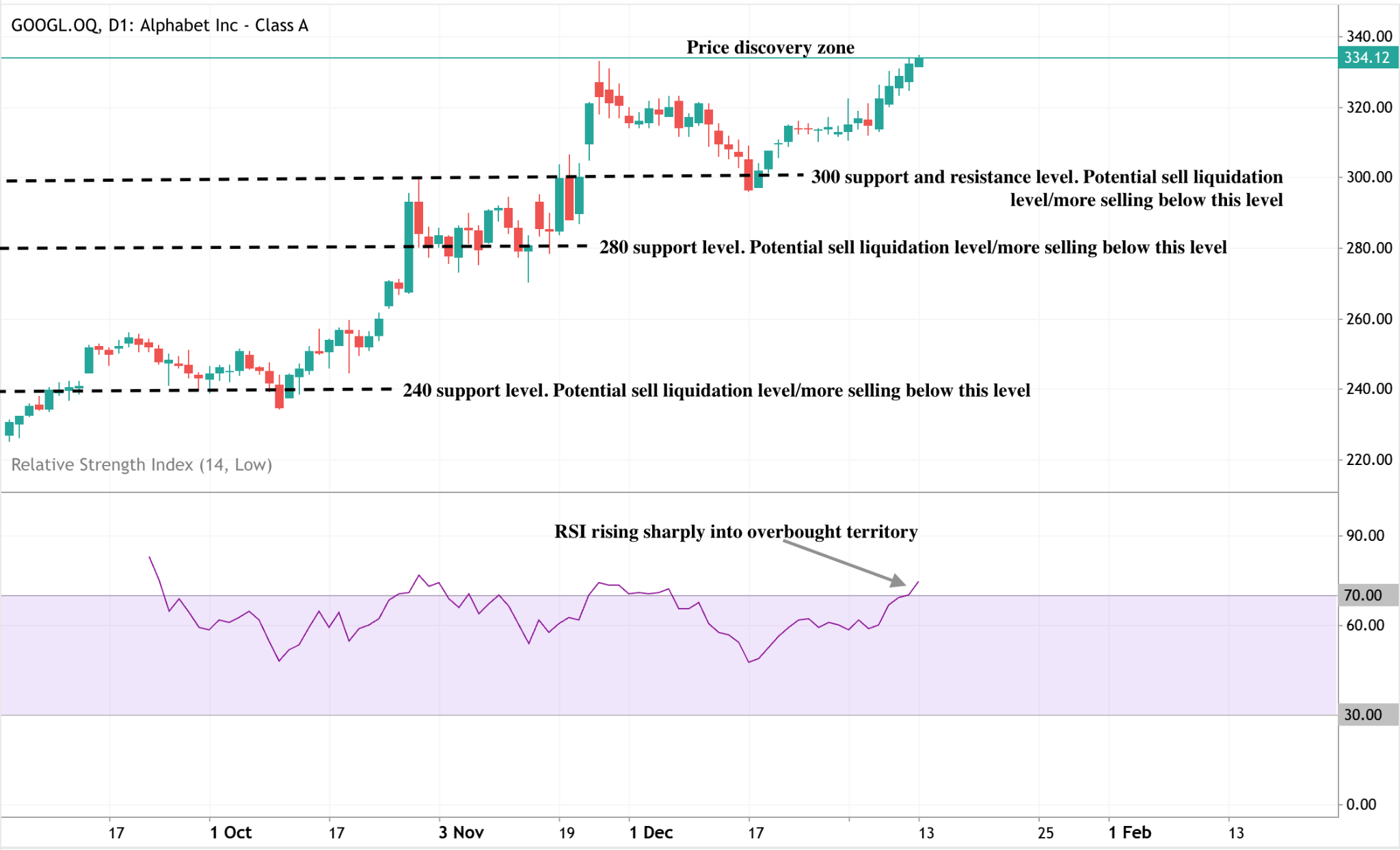
Alphabet hat sich entschlossen in die Preisfindung vorgewagt, den vorherigen Widerstand überwunden und seinen Aufwärtstrend mit starker Dynamik fortgesetzt. Die Bewegung spiegelt eine anhaltende Nachfrage wider, doch Momentum-Indikatoren deuten darauf hin, dass die Bedingungen zunehmend überdehnt sind: Der RSI steigt steil in den überkauften Bereich.
Strukturell bleibt der Trend klar konstruktiv, solange der Kurs über der 300-Dollar-Zone bleibt, die sich nach zuvor begrenzten Gewinnen nun zu einem wichtigen Unterstützungsbereich gewandelt hat. Ein stärkerer Rücksetzer könnte unterhalb von 280 Dollar in den Fokus rücken, während eine anhaltende Akzeptanz über dem aktuellen Niveau die Aufwärtsdynamik beibehalten würde – auch wenn kurzfristige Pausen auftreten, während der Markt seine Gewinne verarbeitet.
Trader, die diese Bewegungen verfolgen, können die Kursentwicklung von Alphabet und Apple in Echtzeit auf Deriv MT5 analysieren, wo fortschrittliche Indikatoren, Multi-Zeitrahmen-Charts und US-Tech-Aktien auf einer Plattform verfügbar sind.
Die angegebenen Wertentwicklungen sind keine Garantie für zukünftige Ergebnisse.


