
From wallets to markets: A practical guide to cryptocurrency trading on Deriv

Cryptocurrency operates on decentralised networks where every transaction is verified and recorded on a blockchain rather than stored in traditional banking systems. As adoption grows through clearer regulations, exchange‑traded products, and global payment integrations, traders increasingly face market conditions shaped by blockchain activity. Understanding how modern crypto works is essential for making informed decisions. This guide explains how crypto mechanics influence funding, timing, volatility, and execution when trading crypto CFDs on Deriv MT5 and Multipliers on Deriv Trader.
Quick summary
- Crypto functions as digital, peer‑to‑peer money secured through cryptography and decentralised verification.
- Confirmations are irreversible once finalised on the blockchain, making security and accuracy essential.
- Network events such as Bitcoin’s halving and Ethereum upgrades affect fees, settlement speed, and market behaviour.
- Liquidity, volatility, and regulation continue to shape crypto access and execution across trading platforms.
- These concepts support decision‑making, but cryptocurrency trading remains high‑risk and requires disciplined planning.
How modern crypto mechanics shape trader decisions?
Crypto networks process transactions independently of financial institutions, and the timing and cost of each transfer depend on network conditions. Block production speed, fee markets, congestion, and validator behaviour all affect how quickly funds move between wallets and platforms. For traders, these variables influence when margin becomes available or when entries can be executed. A clear grasp of how crypto settles under different conditions helps traders set realistic expectations for timing and prepare for periods when networks slow or fees rise.
How wallets, confirmations, and fees influence trading behaviour?
Every funding action in crypto begins with a wallet. Whether custodial or self‑custody, a wallet determines how quickly traders can access or move capital. Confirmation times vary across networks, which can delay deposits during heavy traffic or upgrades. Fees fluctuate based on demand, sometimes rising sharply around major market events. Traders who understand these operational realities can plan earlier funding, reduce rushed decisions, and avoid avoidable delays that might cause them to miss opportunities during high‑volatility moments.
According to Deriv’s trading education team, recognising how confirmation delays occur helps traders anticipate funding windows more accurately and avoid mistimed entries.
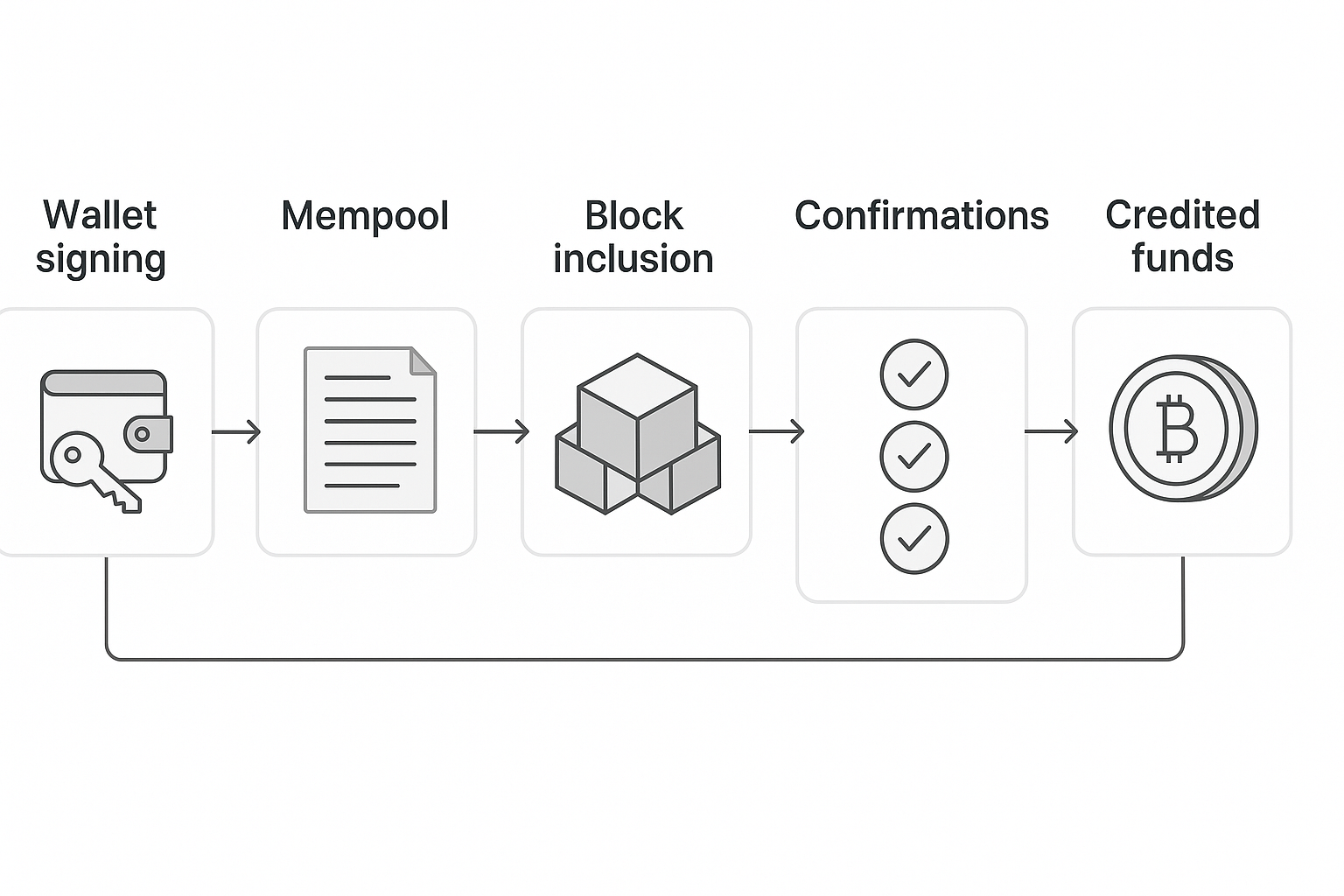
(Alt text: Steps from wallet signing to mempool, block inclusion, confirmations, and credited funds.)
How network events alter volatility and liquidity?
Changes within blockchain networks ripple quickly through market behaviour. Bitcoin’s halving adjusts miner incentives and can tighten fee markets, affecting settlement predictability during peak activity. Ethereum’s upgrades can reduce transaction costs, improving network throughput and shaping activity on related markets. These structural developments influence how liquidity forms on exchanges and how prices respond to news. Traders who track such events can better understand shifts in volatility or spreads during key periods.
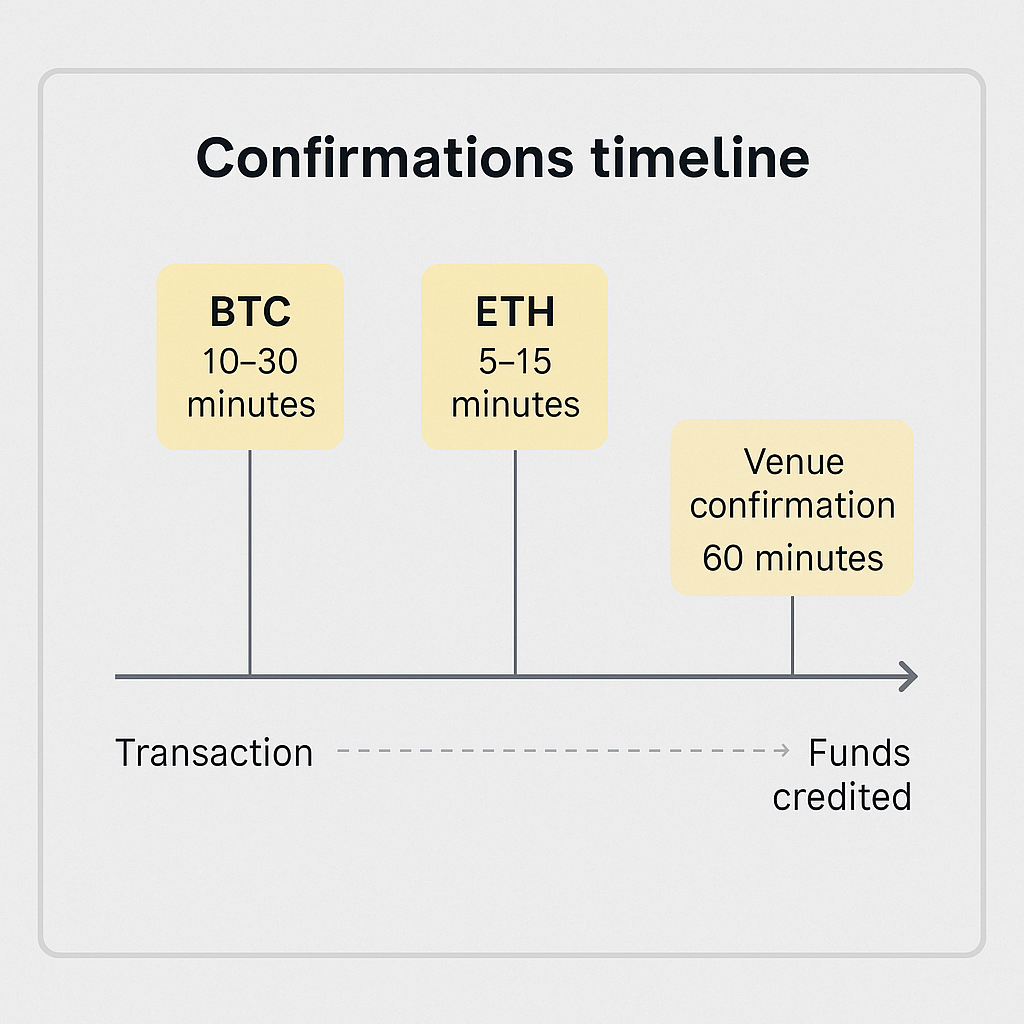
(Alt text: Typical confirmation windows for BTC vs ETH with venue confirmation examples.)
How crypto CFDs on Deriv reflect market structure?
Crypto CFDs on Deriv mirror underlying market movements without requiring traders to manage crypto custody. When network congestion affects broader market liquidity, CFDs may reflect these conditions through wider spreads or sharper intraday swings. Because CFDs allow flexible entries and exits, traders can adjust their approach based on volatility, depth, and sentiment. Understanding how underlying market structure influences CFD behaviour helps traders prepare for varying execution conditions.
Deriv’s market strategy team notes that volatility should be managed thoughtfully. While defined‑risk features exist on some instruments, market conditions still require careful decision‑making and consistent risk control.
How crypto Multipliers fit into volatile market conditions?
Multipliers allow traders to amplify price movements using a fixed stake, which defines the maximum potential loss per position. In fast‑moving markets, this structure can help traders participate in short bursts of volatility while keeping risk boundaries visible. However, because price changes are magnified, multipliers require strict attention to timing, session activity, and exit planning. When used carefully, they complement CFDs by offering traders an additional way to engage with crypto movements.
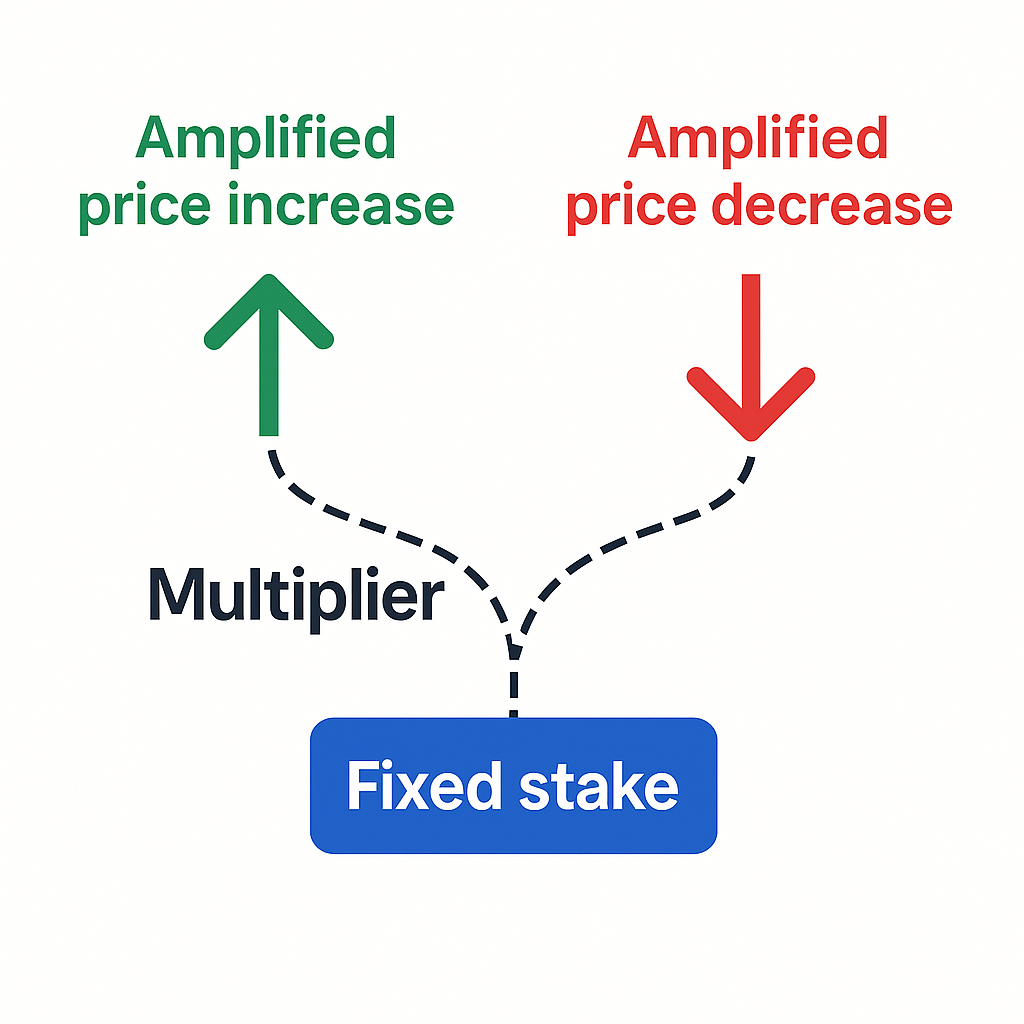
(Alt text: Diagram showing how a fixed stake and chosen multiplier amplify both upward and downward price movements.)
How owning vs trading cryptocurrency changes decision‑making?
Owning cryptocurrency directly involves handling private keys, managing backups, navigating fees, and ensuring secure storage. This approach suits those seeking long‑term exposure or utility. Trading crypto price movements on Deriv removes custody responsibilities and network transfer steps but requires an understanding of market depth, volatility, and strategy. CFDs and Multipliers cater to traders focused on short‑term opportunities, while ownership appeals to those with longer‑horizon goals. Aligning strategy with risk tolerance helps clarify which method fits a trader’s objectives.
How traders adapt their risk management to crypto’s market structure?
Crypto trades nonstop, and liquidity varies across global sessions. Sudden news, regulatory announcements, or network slowdowns can trigger instant price swings. Traders often adjust position size during high‑volatility windows, review stop placements proactively, and monitor stablecoin flows for early clues about sentiment shifts. Routine preparation—such as checking for network maintenance notices or exchange funding delays—helps traders avoid reactive decisions and maintain structured risk habits.
How funding strategies adapt to blockchain conditions?
Funding a trading account is not only a logistical step but also a strategic one. Because blockchain networks vary in speed, cost, and reliability depending on demand, traders often plan their deposits around expected congestion. High-fee environments—common during major market announcements or network surges—can delay confirmations and affect the timing of positions. Choosing the appropriate network for stablecoin transfers, such as using lower-cost chains when available, can help traders minimise delays and maintain flexibility. Traders also routinely pre‑fund accounts before anticipated volatility so their capital is accessible without waiting for confirmations.
Deriv Market Analyst team mentions:
“Funding choices can influence how effectively traders respond to fast-moving markets. Recognising when networks slow down or fees spike helps traders prepare their capital in advance rather than reacting under pressure.”
What are advanced risk-management behaviours in crypto markets?
Crypto volatility is not random; it often clusters around key events, liquidity shifts, and market opens across global regions. Traders adapt by scaling position sizes according to volatility levels, widening stops during unstable periods, or reducing leverage during unpredictable cycles. Because markets operate continuously, exits may coincide with thin liquidity or sudden sentiment changes, so monitoring on‑chain flows, stablecoin activity, and network conditions helps traders refine timing. Structured routines—such as reviewing stop placements before major events or adjusting exposure ahead of weekend liquidity drops—support disciplined decision‑making.
How does global session behaviour shape execution?
Crypto markets operate continuously, but liquidity and volatility shift across global sessions. Asian trading hours often feature steady activity driven by regional exchanges and early news cycles, while European hours introduce higher participation from institutional desks, influencing spreads and directional momentum. The US session typically brings the sharpest reactions, as major economic releases, corporate announcements, and regulatory updates occur during this window. These cycles shape how quickly markets move and how reliably orders fill. Traders who pay attention to these rhythms can better anticipate when slippage may increase, spreads may widen, or volatility may spike unexpectedly.
Deriv Market Strategy team elaborates:
“Session behaviour affects more than volatility—it also shapes execution quality. Traders who understand when liquidity strengthens or thins out are better equipped to plan their actions without relying on assumptions about market stability.”
Global session dynamics also interact with network activity. For example, periods of intense blockchain usage in one region may coincide with thin‑liquidity windows elsewhere, amplifying price swings. As a result, traders often review session overlap periods—such as Europe into the US—where liquidity typically peaks. Understanding these differences helps traders set expectations for execution quality, especially when using tools like CFDs that reflect underlying market depth.
How do regulatory developments influence trading conditions?
Regulatory announcements can significantly influence crypto market behaviour, especially when they relate to taxation, exchange governance, stablecoin classifications, or restrictions on service providers. Markets often react sharply to news involving major jurisdictions, as these changes may affect liquidity access, institutional participation, or perceived long‑term viability of specific assets. Traders who monitor regulatory calendars and public consultations gain early awareness of potential disruptions. Even when regulations are not directly implemented, the anticipation of change alone can contribute to volatility as market participants reassess risk.
In some cases, regulatory clarity improves market structure by defining operational requirements for exchanges, custody providers, or brokers. This can encourage greater participation from financial institutions, indirectly supporting liquidity conditions. However, sudden announcements—such as enforcement actions or new compliance directives—may cause short‑term uncertainty. Understanding how these shifts influence sentiment helps traders prepare for periods where spreads widen, volumes fluctuate, or execution speed varies.


