
Da un sogno da 70 miliardi di dollari alla realtà dell’IA: Meta taglia il budget per il metaverso del 30% per potenziare l’IA
.png)
Il sogno di Meta di un metaverso da 70 miliardi di dollari sta lasciando il posto a una realtà incentrata sull’IA. Secondo i report, l’azienda potrebbe ridurre la spesa per le sue ambizioni nel mondo virtuale fino al 30% nel 2026, dopo che Reality Labs ha accumulato oltre 60 miliardi di dollari di perdite operative dal 2021.
I dati pubblicati hanno rivelato che solo l’ultimo trimestre ha registrato una perdita di 4,4 miliardi di dollari su ricavi di circa 470 milioni, sottolineando lo squilibrio tra ambizione e trazione commerciale. Gli investitori hanno reagito con sollievo, facendo salire il titolo di circa il 4%, poiché le speranze di una disciplina più rigorosa hanno sostituito anni di frustrazione per esperimenti costosi che non sono riusciti a scalare.
La svolta arriva in un momento in cui l’intelligenza artificiale è diventata il principale motore strategico di Meta. Zuckerberg sta sempre più posizionando l’azienda attorno alla capacità di calcolo, al silicio personalizzato e alla suite di modelli Llama, piuttosto che agli incontri tra avatar in Horizon Worlds. I capitali si stanno spostando verso infrastrutture IA che promettono percorsi di ricavo più chiari e un mercato indirizzabile riconoscibile dagli investitori. Molti affermano che la domanda non è più se il metaverso definirà il futuro di Meta, ma cosa ne resterà mentre l’azienda accelera nella corsa all’IA.
Cosa sta guidando la svolta di Meta?
Diverse forze strutturali hanno spinto Meta verso questa ricalibrazione. Le performance finanziarie di Reality Labs sono diventate impossibili da ignorare: le perdite annuali sono salite da 10,2 miliardi di dollari nel 2021 a 17,7 miliardi nel 2024, senza segni evidenti di un’adozione di massa che giustifichi questa traiettoria.
Horizon Worlds non è mai diventata la piazza digitale che Zuckerberg immaginava, e la linea di visori Quest, sebbene tecnologicamente impressionante, ha faticato a uscire da una nicchia di appassionati. È diventato chiaro che il comportamento degli utenti non si stava orientando verso la VR alla velocità che Meta aveva previsto.
Allo stesso tempo, l’intelligenza artificiale ha offerto una narrazione commerciale più convincente. Meta prevede di destinare 70–72 miliardi di dollari nel 2025 in spese in conto capitale per data center, chip IA e sviluppo di modelli. L’azienda ha inoltre investito 14,3 miliardi di dollari in Scale AI per una quota del 49%, segnalando la volontà di ancorarsi al livello infrastrutturale dell’ecosistema IA. L’azienda ha condiviso che questa espansione riflette un passaggio dalla costruzione speculativa di piattaforme a una domanda immediata da parte di inserzionisti, aziende e sviluppatori che cercano capacità IA piuttosto che mondi immersivi.
Perché è importante
Secondo gli analisti, la riallocazione delle risorse sta rimodellando le relazioni sia all’interno che all’esterno di Meta. Gli investitori hanno sollecitato un approccio più disciplinato da quando Meta si è rebrandizzata nel 2021, e la narrazione sempre più debole del metaverso offre una copertura alla leadership per realizzare ciò che il mercato desidera da tempo: un’azienda allineata ai cicli tecnologici monetizzabili.
Come ha dichiarato un analista a The Information alla fine dello scorso anno, “L’IA offre ritorni che puoi modellare; il metaverso era un salto di fede lungo un decennio.” Questo sentimento si sta facendo eco a Wall Street mentre Meta segnala l’inizio di un’era di investimenti più concreti.
Le conseguenze interne non sono meno significative, aggiungono gli esperti. I team legati al metaverso affrontano tagli più profondi rispetto al resto dell’azienda, e i licenziamenti potrebbero iniziare già da gennaio se i piani verranno finalizzati. Sviluppatori e specialisti hardware dovranno adattarsi a un ecosistema in cui il visore non è più il fulcro strategico. Al contrario, sarà l’IA a definire lo scopo dei prodotti, il coinvolgimento degli utenti e l’economia del prossimo decennio di Meta.
Impatto sull’industria tech, sui mercati e sui consumatori
Secondo gli osservatori di mercato, il panorama tecnologico si sta adeguando al cambiamento di Meta. I rivali che hanno riformulato o abbandonato silenziosamente le proprie narrazioni sul metaverso ora appaiono lungimiranti. L’enfasi di Apple sullo “spatial computing” piuttosto che sull’immersione virtuale totale le ha permesso di evitare il contraccolpo che ora Meta sta affrontando. Con Meta che fa un passo indietro, Apple ottiene una corsia preferenziale nella realtà mista di fascia alta, mentre Meta si muove con decisione per diventare uno dei maggiori acquirenti mondiali di capacità di calcolo IA.
Per i consumatori, il cambiamento si rifletterà nei prodotti che incontreranno. I visori Quest continueranno, ma secondo gli esperti le aspettative per una piattaforma metaverso unificata stanno svanendo. Gli occhiali smart Ray-Ban di Meta – un successo a sorpresa – indicano un futuro in cui dispositivi più leggeri e socialmente accettabili fungono da porta d’accesso a compagni IA piuttosto che a universi sintetici. L’azienda ha già presentato questi occhiali come la casa ideale per la “superintelligenza personale”, suggerendo che potrebbero diventare il vero successore dello smartphone nella visione a lungo termine di Meta.
Si riporta che anche gli sviluppatori vivranno una riorganizzazione strategica. Chi crea esperienze VR-first troverà uno spazio più piccolo e sperimentale, mentre strumenti, agenti e interfacce multimodali guidati dall’IA riceveranno maggiore supporto. I mercati hanno interpretato la svolta in termini simili: i capitali che fluiscono verso produttori di chip, fornitori di cloud e aziende allineate all’IA riflettono una fiducia diffusa che Meta intenda competere in modo aggressivo in questo settore.
Prospettive degli esperti
Gli analisti si aspettano che Meta mantenga una presenza nel metaverso, ma come iniziativa di ricerca a lungo termine piuttosto che come visione fondante. L’assunzione da parte dell’azienda dell’ex responsabile del design di Apple, Alan Dye, suggerisce che l’innovazione hardware resta centrale – ma ora al servizio dell’IA più che dei mondi virtuali. L’obiettivo sembra essere dispositivi senza soluzione di continuità ed eleganti che portino i modelli di intelligenza di Meta nella vita quotidiana.
Tuttavia, la svolta presenta sia opportunità che rischi strategici. Riducendo ora le sue ambizioni sul metaverso, Meta rinuncia al vantaggio di scala che un tempo rivendicava nello spatial computing. Se la VR o la realtà mista dovessero riprendersi più rapidamente del previsto, l’azienda potrebbe trovarsi superata dai rivali. Tuttavia, l’opinione prevalente è che l’IA offra economie più chiare e un’adozione più immediata. La prossima call sugli utili di gennaio fornirà la prima indicazione concreta di quanto saranno profondi i tagli e di quanto rapidamente Meta intenda rimodellare la propria pipeline di prodotti.
Conclusione chiave
La decisione di Meta di ridurre il budget per il metaverso fino al 30% segna un profondo passaggio da mondi virtuali speculativi a un’intelligenza artificiale ad alta intensità di capitale. L’IA ora è il pilastro della roadmap aziendale, della spesa e dell’identità strategica, mentre VR e AR arretrano nel campo della sperimentazione. Gli investitori accolgono con favore questa chiarezza, ma l’impatto completo sarà evidente solo quando la call sugli utili di gennaio confermerà l’entità della svolta. Meta si sta riposizionando sulle tecnologie che le persone stanno adottando oggi – e su quelle che spera di plasmare domani.
Approfondimenti tecnici su Meta
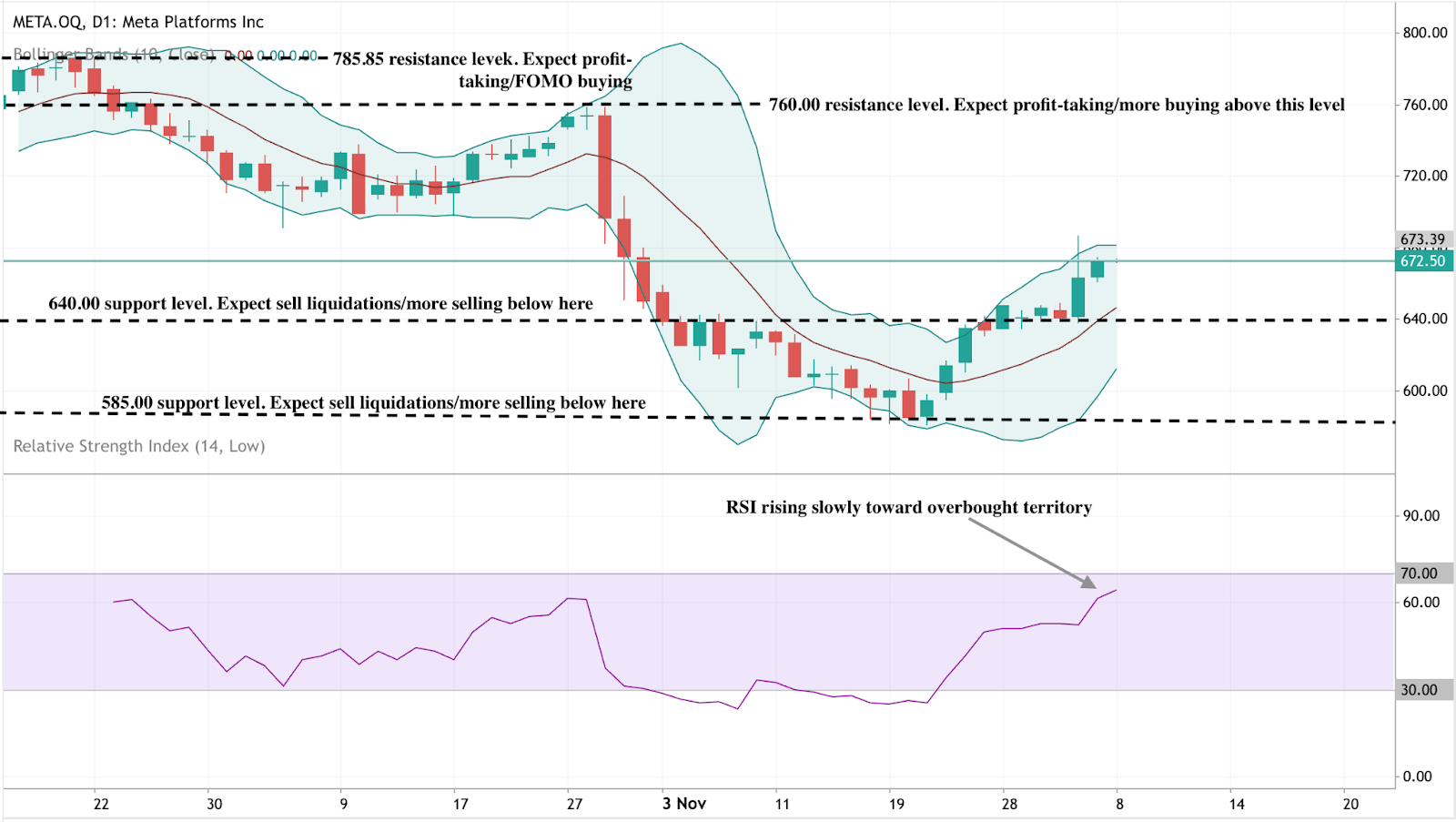
All’inizio della stesura, Meta Platforms (META) è scambiata intorno a 672,50 dollari, proseguendo il suo rimbalzo dopo una forte risalita dai minimi recenti. Il prezzo si sta ora avvicinando a una zona di resistenza chiave a 760,00 dollari, con un’ulteriore barriera a 785,85 dollari, dove i trader si aspettano tipicamente prese di profitto o acquisti guidati dal FOMO se il rally dovesse rafforzarsi ulteriormente. Al ribasso, i livelli di supporto si trovano a 640,00 e 585,00 dollari, e una rottura sotto uno di questi probabilmente innescherebbe liquidazioni e approfondirebbe la correzione.
Il recente recupero dei prezzi ha portato META verso la banda superiore di Bollinger, riflettendo un rinnovato slancio rialzista dopo settimane di forti vendite. Tuttavia, le candele mostrano i primi segnali di esitazione mentre il prezzo si avvicina alla resistenza, suggerendo che il mercato potrebbe presto mettere alla prova la convinzione degli acquirenti.
L’RSI, ora in salita verso quota 70, indica che il momentum sta migliorando costantemente ma si sta anche avvicinando alla zona di ipercomprato. Questo evidenzia un interesse d’acquisto sostenuto, ma suggerisce anche che il potenziale rialzista potrebbe diventare limitato a meno che META non superi la resistenza in modo deciso.
Le performance riportate non costituiscono una garanzia di risultati futuri.


